What Is Plasmapheresis? A Plain-English Guide to TPE
A plain-English explanation of what happens during plasmapheresis

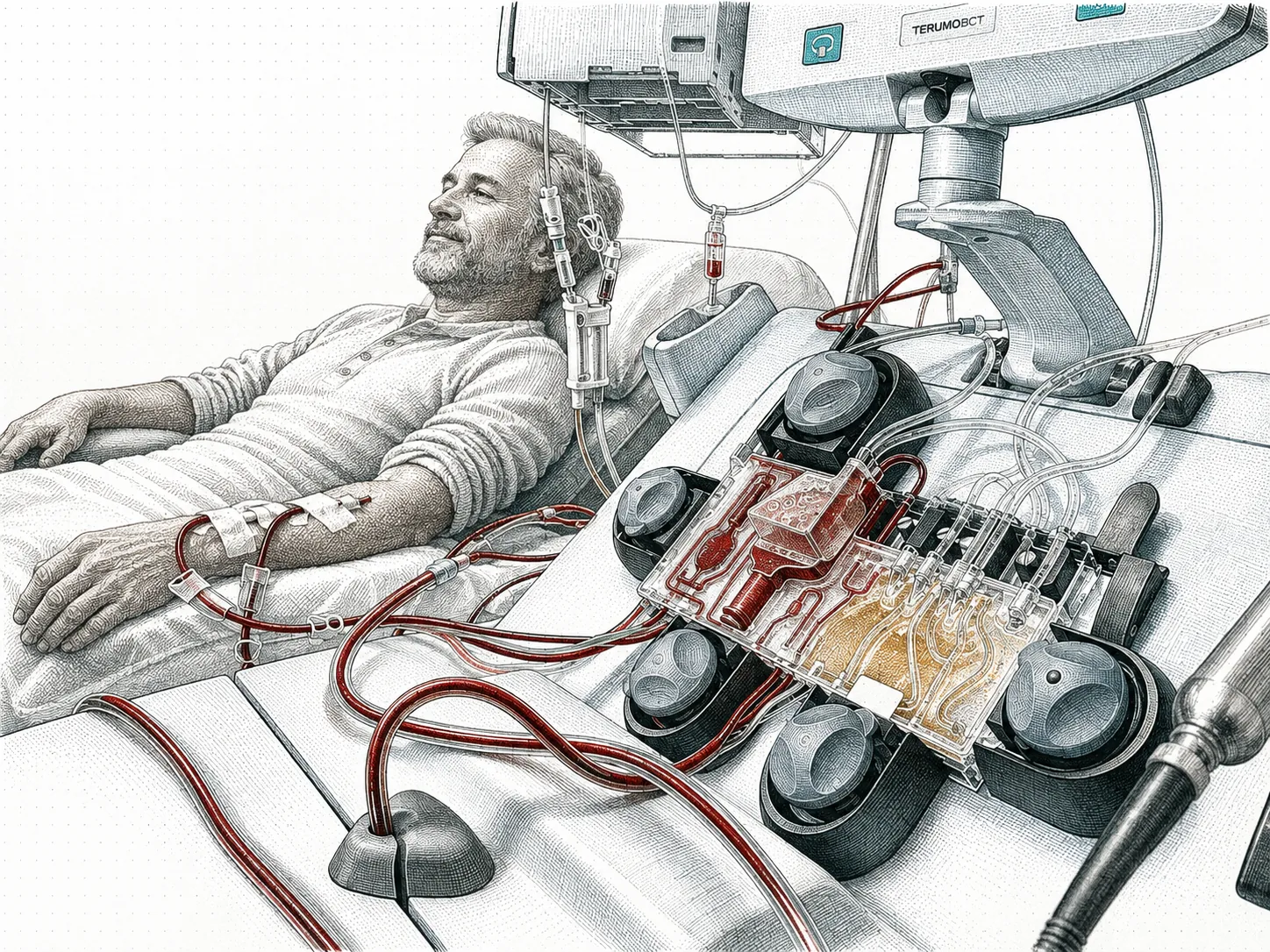
When I first heard the word “plasmapheresis,” I pictured something out of a science fiction movie. A machine swapping out your blood like an oil change. The real procedure is actually more ordinary than that image suggests, but it’s also more precise and more serious than the “blood cleanse” language you’ll see floating around the internet. Once you understand what plasma actually is and what the machine is doing to it, the whole thing stops sounding mysterious and starts making a lot of sense.
Quick terminology note, since it trips people up. Most people search for this procedure as “plasmapheresis,” and that’s genuinely just what most people call it, so that’s the word I’ll reach for most through this site. You’ll also see it called “therapeutic plasma exchange,” or “TPE” for short. That’s the more clinical name, the one you’re likely to find on an actual treatment plan or consent form, or hear from a doctor. Same procedure, just two different names for it.
Blood is not one thing
Most people think of blood as a single red liquid. It isn’t. Blood has two main parts, and the difference between them is the entire key to understanding plasmapheresis.
The first part is cells: red blood cells, white blood cells, and platelets. These are what most of us picture when we think of blood.
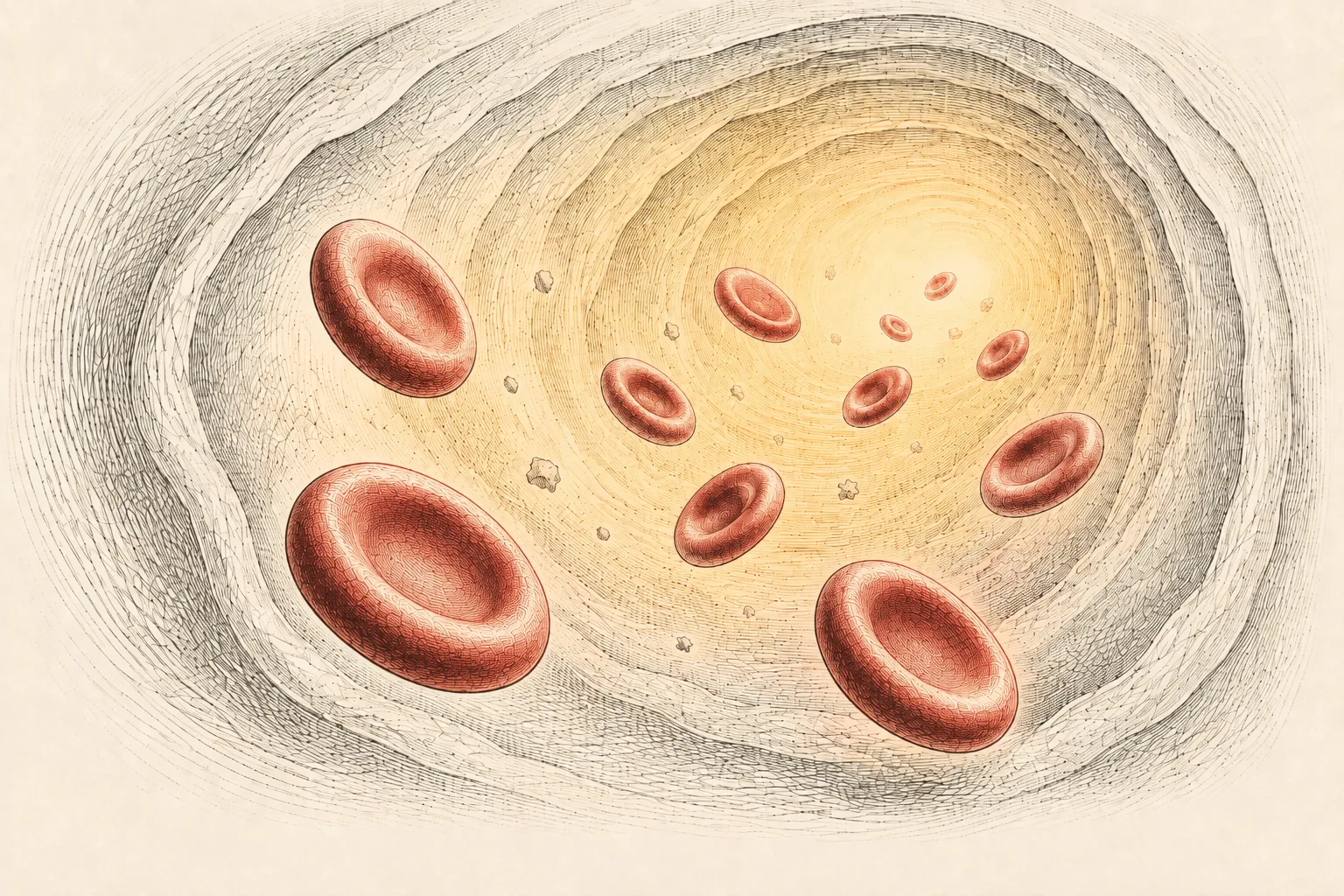
The second part is plasma. Plasma is the pale yellow liquid that carries almost everything else your blood does. Proteins, antibodies, clotting factors, fats, hormones, and inflammatory signals all travel through your body dissolved in plasma. If blood cells are the passengers, plasma is closer to the water they’re floating in, except that water is doing a lot of active work.
This distinction matters because a lot of what doctors are trying to remove with plasmapheresis lives specifically in the plasma. Harmful antibodies. Elevated inflammatory proteins. Immune complexes. Certain abnormal proteins tied to blood disorders. All of it is dissolved in the plasma, not sitting inside the cells. So TPE isn’t some vague attempt to purify your whole bloodstream. It’s a targeted swap of one specific layer of it.
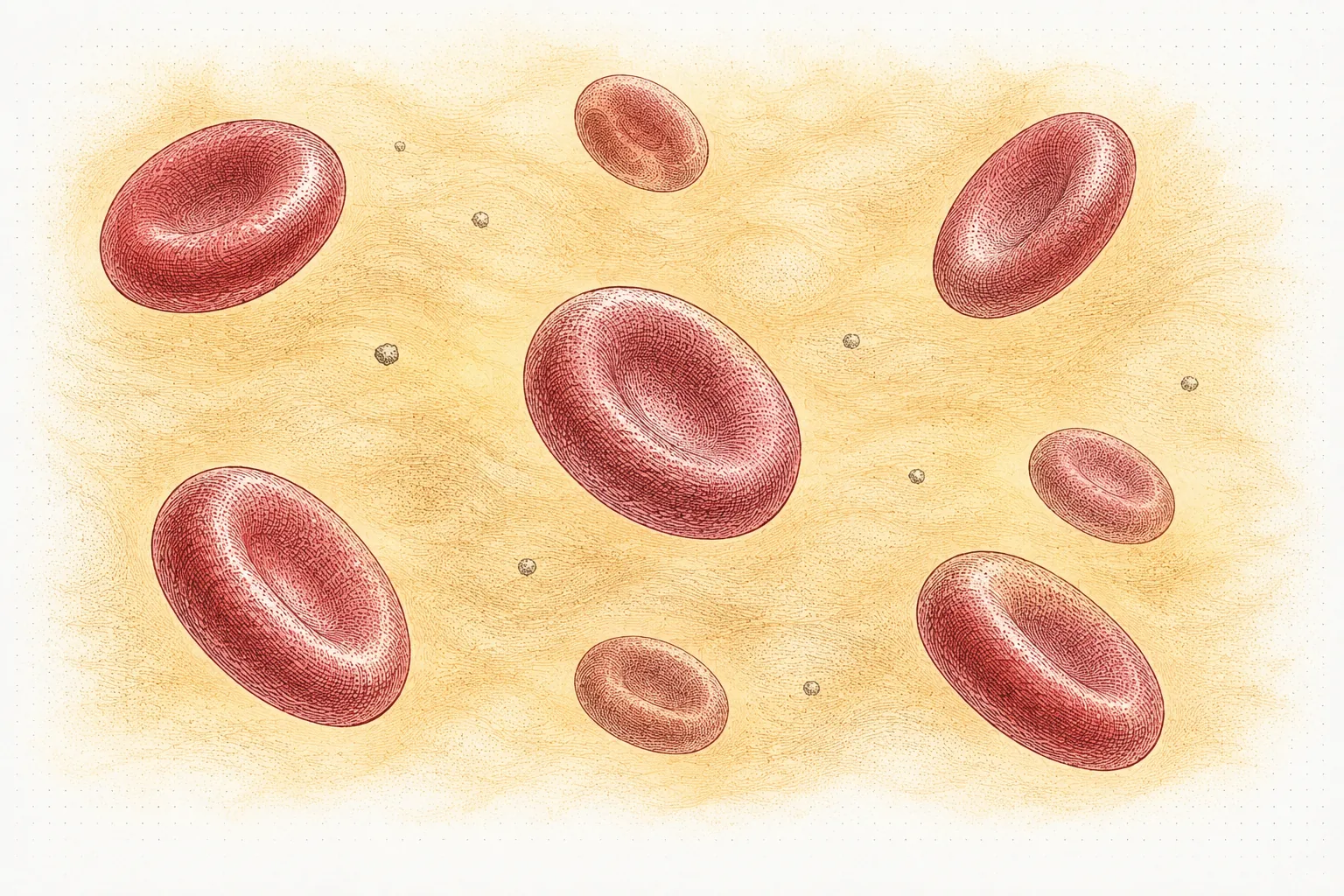
Red cells suspended in plasma. The liquid is the part plasmapheresis exchanges.
What actually happens during plasmapheresis treatment
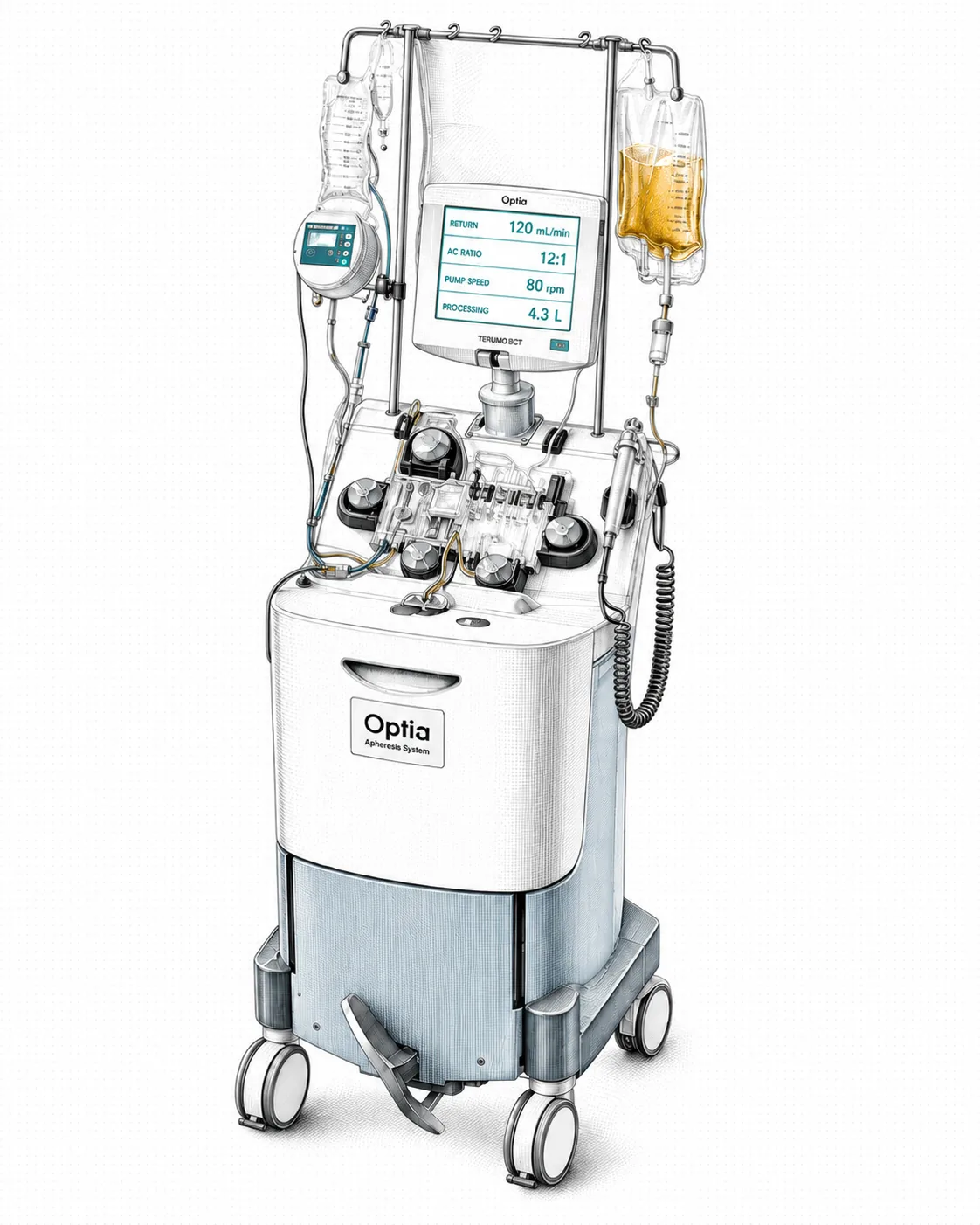
Plasmapheresis is done with a machine called an apheresis machine, and the process is more mechanical than medical drama would have you believe.
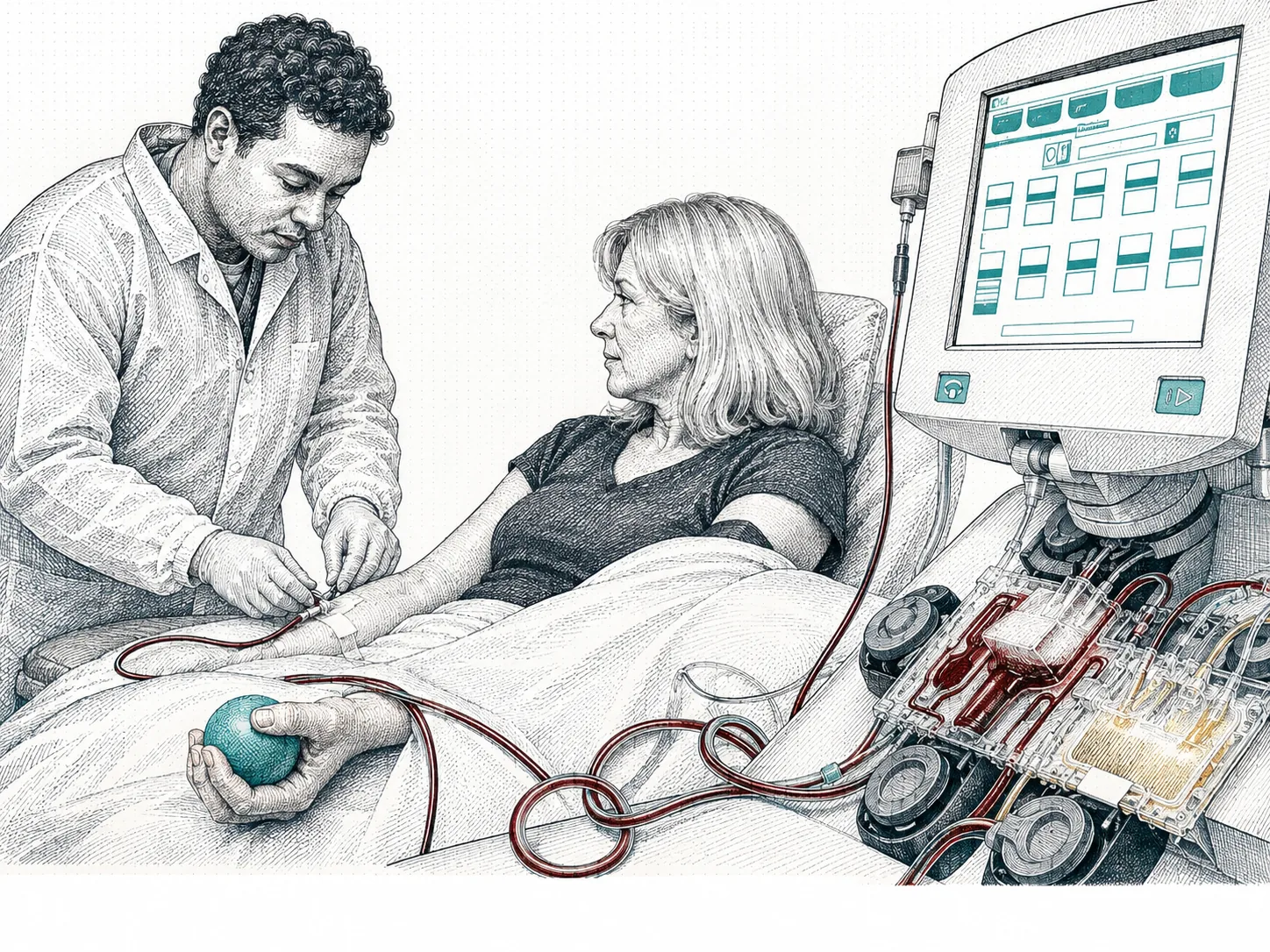
Blood leaves your body through an IV, or in some cases a larger line if your veins or your situation call for it. That blood runs into the machine, which separates the cells from the plasma one of two ways. Older machines spin the blood in a centrifuge fast enough that the heavier cells and the lighter plasma separate out, the same basic principle as cream separating from milk. Newer machines run the blood through a membrane filter instead, with pores small enough to let plasma through but not the cells. A technical breakdown of both methods is available through the National Library of Medicine, if you want the mechanical detail. Either way, the plasma, the part carrying the problem substances, gets pulled out and set aside. In its place, the machine adds a replacement fluid, which depending on the reason for treatment might be albumin (a protein solution), donor plasma, a saline based fluid, or some mix of those. Then your own blood cells, now paired with the replacement fluid instead of your old plasma, go back into your body.
Here’s the part that surprised me when I first read about it: none of this happens in separate stages where blood is removed, treated, then returned all at once. It’s continuous. Blood is leaving and coming back at roughly the same time throughout the session, which is why the whole thing usually takes somewhere between two and four hours. Most conditions treated with plasmapheresis require more than one session, sometimes many, and the exact number depends heavily on what’s being treated and how the person responds.
What plasmapheresis is not
This is where I think most of the confusion online actually comes from, so it’s worth being direct about three comparisons people get wrong constantly.
It is not plasma donation
When you donate plasma, a relatively small amount is drawn off to be used for someone else later, often processed into medications. Plasmapheresis removes a much larger volume of your own plasma, for your own treatment, and replaces it in the same sitting. The purpose, the scale, and the setting are all different. One is a donation. The other is a medical procedure performed on a patient with a specific condition. I go through that comparison in a lot more detail in TPE vs. Plasma Donation, since it's the mix-up I run into most.
Nor is it dialysis
Dialysis exists to do the job your kidneys aren't doing, filtering waste and excess fluid out of your blood. Plasmapheresis has nothing to do with kidney function. It's about the plasma, not the filtration system. If you want the longer version of that comparison, I wrote it up separately in Is Plasmapheresis the Same as Dialysis?
It is not a detox
I want to push back on this one specifically, because "blood cleanse" language shows up constantly in casual conversations about plasmapheresis, and it undersells what's actually going on. TPE removes plasma and the specific substances traveling in that plasma. Whether that helps you depends entirely on whether the problem you're dealing with is actually driven by something in the plasma in the first place. It's not a general wellness flush. It's a targeted intervention that only makes sense for certain conditions.
Why removing plasma can actually help
So why would taking out someone’s plasma make them better? It comes down to what’s dissolved in it.
Some autoimmune diseases are driven by antibodies that mistakenly attack a person’s own tissue. Those antibodies are circulating in the plasma, so removing the plasma removes a meaningful share of them, at least temporarily. Other conditions involve dangerously elevated inflammatory proteins, again floating in the plasma. Immune complexes, which are clumps of immune activity that can build up and damage organs over time, live there too. And certain blood disorders involve abnormal proteins that either shouldn’t be present at all or are present at levels that cause problems on their own.
Put together, the conditions plasmapheresis actually treats today tend to fall into a few buckets. Cleveland Clinic’s patient guide to the procedure groups them into neurological disorders like myasthenia gravis, blood disorders like thrombotic thrombocytopenic purpura, and certain blood cancers such as Waldenstrom macroglobulinemia. Different diseases, but the same basic reason plasma removal helps in each one.
In each case, plasmapheresis works the same basic way. It lowers the concentration of the harmful substance by taking out the fluid it’s dissolved in. That’s the whole mechanism. It’s not curing the underlying disease process that keeps producing the antibody or the inflammatory signal. It’s reducing how much of it is in circulation at a given moment, which for some conditions is enough to make a real clinical difference.
Where the evidence actually stands
Here’s an important distinction I think gets lost a lot, especially once plasmapheresis starts getting mentioned in longevity and biohacking circles. The fact that TPE can physically remove something from your plasma doesn’t mean removing it automatically fixes whatever condition you’re dealing with.
For a number of diseases, plasmapheresis isn’t experimental at all. It has decades of clinical use behind it, and I get into how that history actually played out in TPE Has Been a Hospital Procedure for Decades. Myasthenia gravis, Guillain-Barre syndrome, and certain blood disorders fall into that established category. The American Society for Apheresis, the group that publishes the guidelines apheresis centers actually follow, ranks conditions like these in its top tier, meaning the evidence behind TPE is strong enough that it’s treated as a first line option rather than something doctors reach for after everything else fails.
For other applications, the research is still ongoing, and for the newest ones, particularly the longevity angle that’s gotten a lot of attention recently, the evidence is genuinely early. I find it interesting. Plasma carries thousands of proteins and signaling molecules that shift as people age, and the idea that resetting some of that composition might matter for aging isn’t crazy on its face. But early and interesting is not the same as proven, and I’m not going to pretend otherwise just because the idea is compelling.
That gap between what’s established and what’s still being tested is really the reason this whole site exists. The rest of what you’ll find here works through both sides of that line, honestly, without hyping the parts that are still uncertain or downplaying the parts that already have decades of evidence behind them.
Next in the guide
Why the two get confused, and why it matters
The information provided on this site is for general informational purposes only and is not intended as a substitute for professional medical advice, diagnosis, or treatment. Always seek the advice of your physician or other qualified health provider with any questions you may have regarding a medical condition. Do not disregard professional medical advice or delay seeking it because of information you find on this site. The content is not a substitute for an individualized assessment by a healthcare provider.