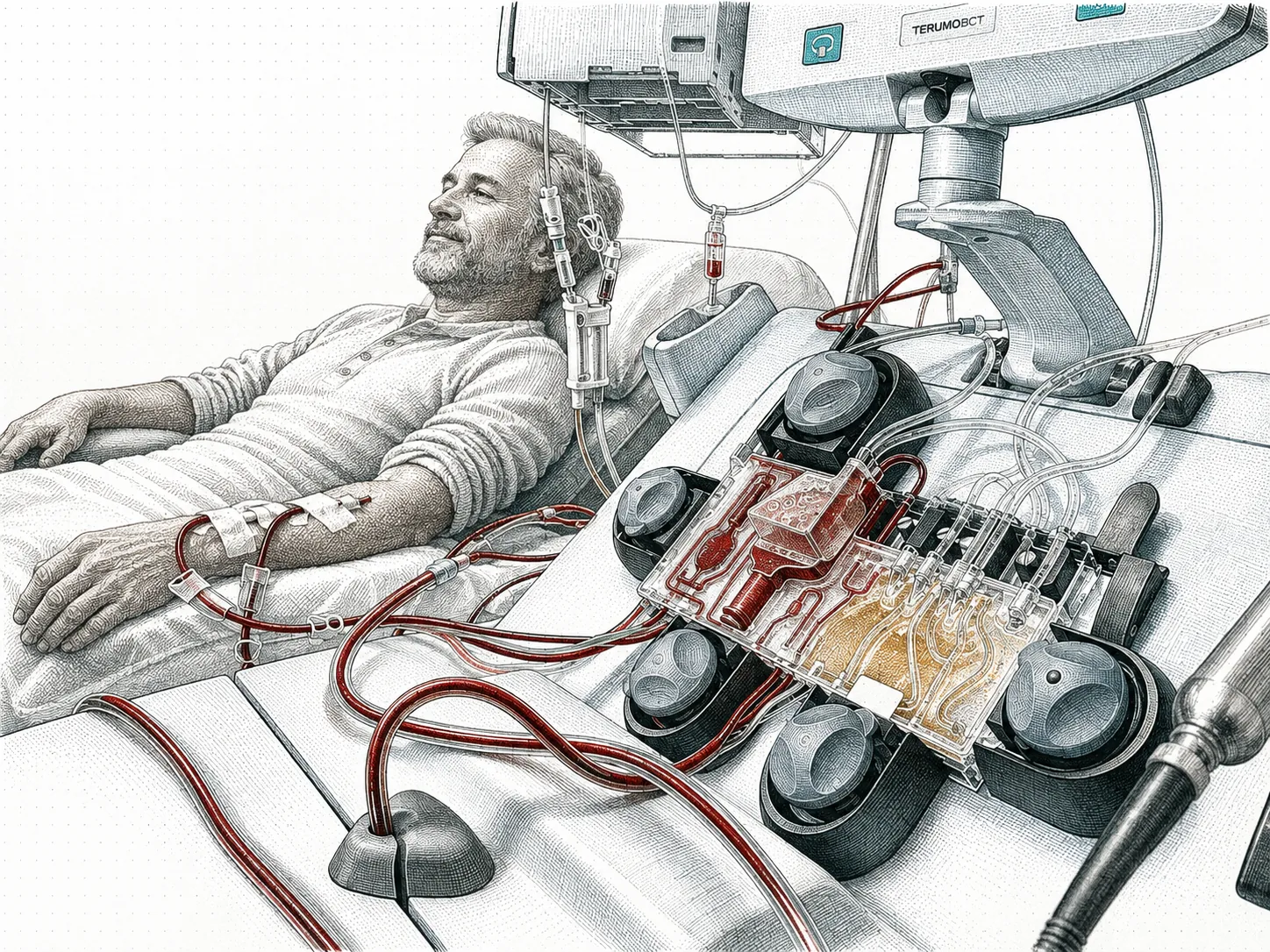
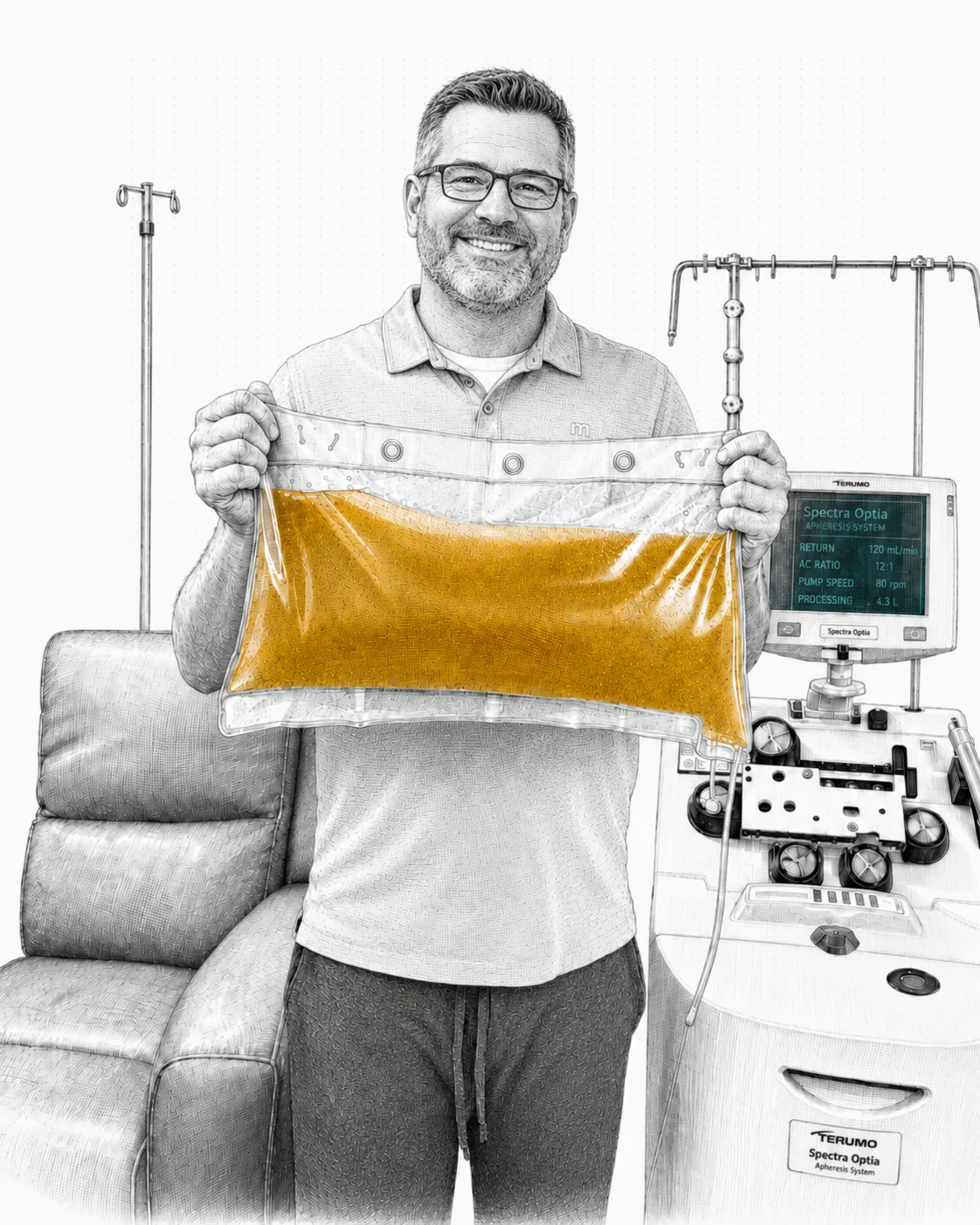
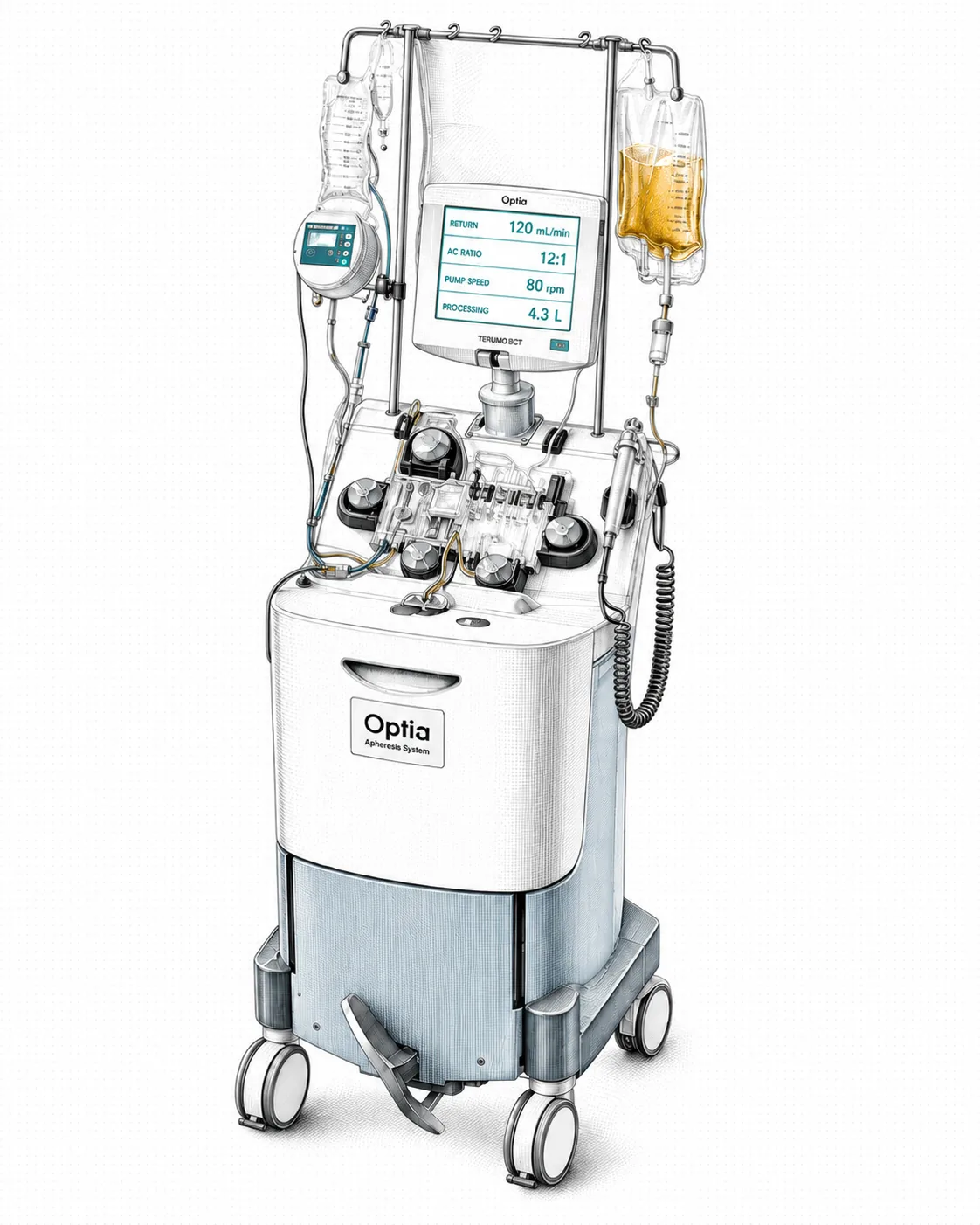
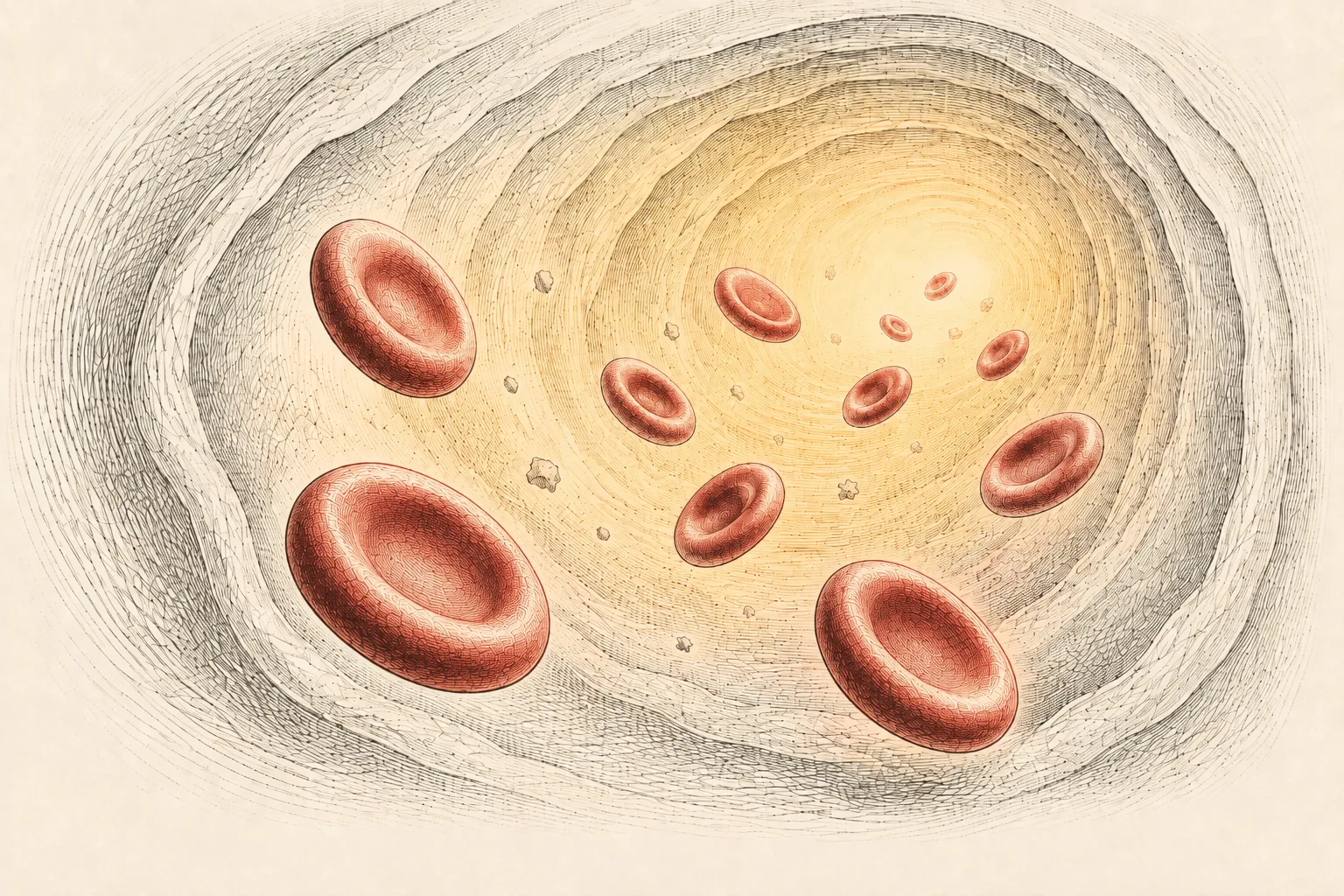
When I first heard the word "plasmapheresis," I pictured something out of a science fiction movie. A machine swapping out your blood like an oil change. The real procedure is actually more ordinary than that image suggests, but it's also more precise and more serious than the "blood cleanse" language you'll see floating around the internet. Once you understand what plasma actually is and what the machine is doing to it, the whole thing stops sounding mysterious and starts making a lot of sense.
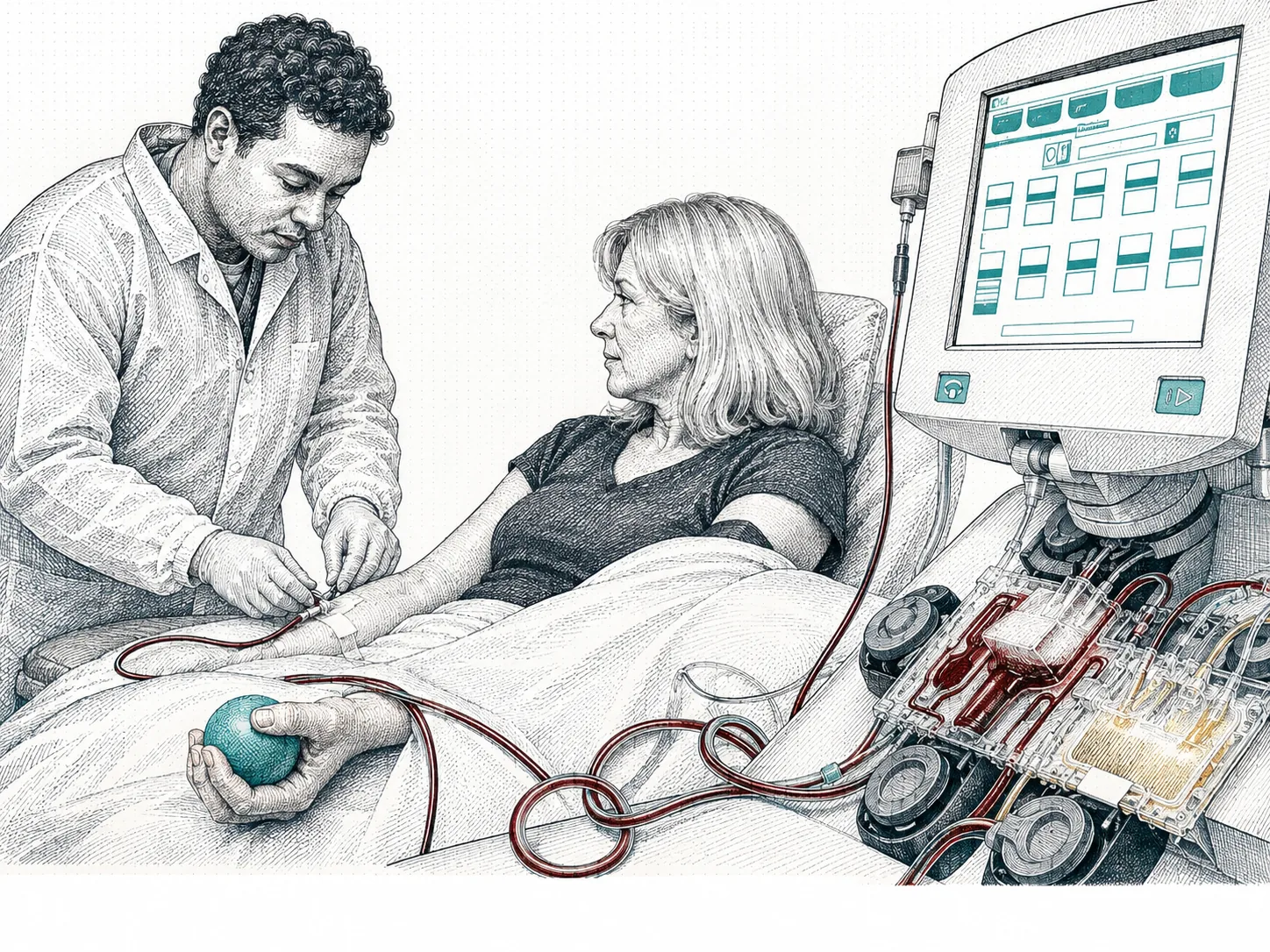
Before I actually looked into it, I pictured a plasmapheresis session, also called TPE, as something close to a long blood draw. Needle goes in, plasma comes out, you sit for a while, you leave. That mental picture is not wrong exactly, but it skips almost everything that actually fills the hours, and I think that gap is where most of the nerves around a first appointment come from. People aren't scared of plasma exchange. They're scared of not knowing what the next four hours of their day are going to look like.
The first time I priced out plasmapheresis, I found quotes anywhere from $4,500 to $15,000 for what everyone was calling "one session." That's more than a 3x spread for the exact same procedure, and my first thought was the obvious one: somebody's getting overcharged, or somebody's cutting corners.
Plain-English answers about therapeutic plasma exchange, for people who have just been told they need it and for the families sitting in the room with them.
This site explains therapeutic plasma exchange in ordinary language, for people who have just been told they need it. It is written independently for a general audience, and it sells nothing.
The information provided on this site is for general informational purposes only and is not intended as a substitute for professional medical advice, diagnosis, or treatment. Always seek the advice of your physician or other qualified health provider with any questions you may have regarding a medical condition. Do not disregard professional medical advice or delay seeking it because of information you find on this site. The content is not a substitute for an individualized assessment by a healthcare provider.