Plasmapheresis Procedure: What to Expect, Step by Step
One session end to end, from the first needle to the walk out

Before I actually looked into it, I pictured a plasmapheresis session, also called TPE, as something close to a long blood draw. Needle goes in, plasma comes out, you sit for a while, you leave. That mental picture is not wrong exactly, but it skips almost everything that actually fills the hours, and I think that gap is where most of the nerves around a first appointment come from. People aren’t scared of plasma exchange. They’re scared of not knowing what the next four hours of their day are going to look like.
So here is the walkthrough I wish I’d had before my first session, laid out roughly in the order things happen.
The labs come first
Most centers want blood work done shortly before treatment, sometimes the day before, sometimes the morning of. It’s more than paperwork. The labs are checking whether it’s safe to proceed and helping the team figure out exactly how much plasma to remove.
A few of these numbers matter more than the others. Hematocrit is one of them. Hematocrit is basically the percentage of your blood that is made up of red blood cells, and it’s used to estimate how much of your blood volume is actually plasma. That number feeds into a fairly simple calculation. Some centers use a formula like this: estimated plasma volume equals 0.065 times your weight in kilograms, times one minus your hematocrit. Other places start by estimating your total blood volume from your height, weight, and sex, then apply the same hematocrit adjustment. Either way, the amount of plasma exchanged during your session is not a round number someone picked. It’s sized to you.
Calcium is the other lab worth understanding ahead of time, because it connects directly to something you’ll likely feel during the session. Plasmapheresis machines use an anticoagulant called citrate to keep your blood from clotting while it’s outside your body. Citrate does this by binding to calcium, and that can temporarily lower the amount of usable calcium in your blood. Low calcium is what causes the tingling around the lips or fingers that a lot of people report during treatment. If your pre-session labs show your calcium running low already, the team may adjust the plan or watch you a little more closely once things get going.
Before the machine even starts
The session doesn’t begin with a needle. There’s a chunk of prep time first, and it can easily take twenty to thirty minutes on its own.
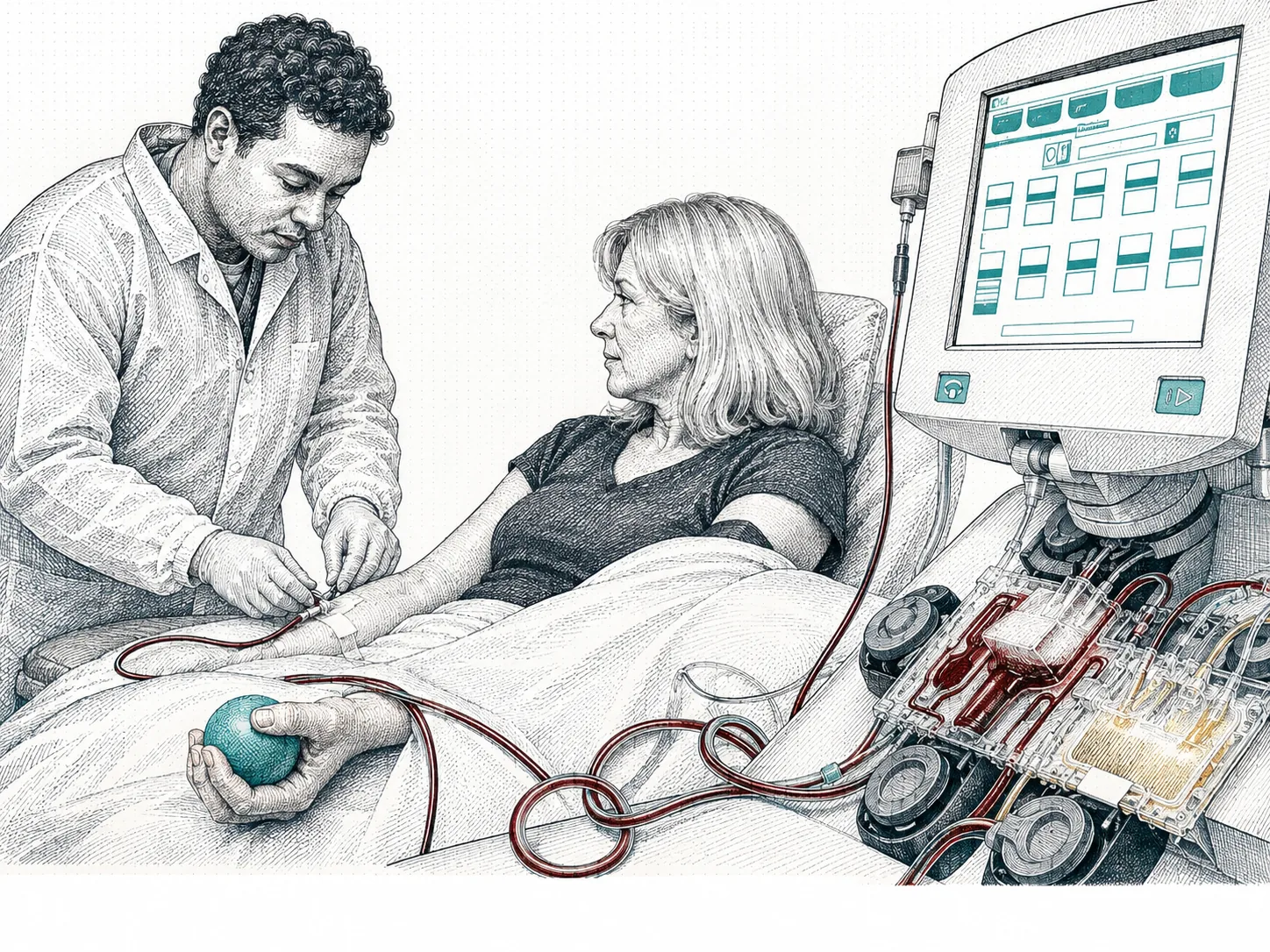
Staff will check your weight, blood pressure, and heart rate. They’ll also look at your vascular access, which ends up being one of the bigger factors in how the whole appointment feels. Some people can do plasmapheresis through IVs placed in the arms, sometimes one line drawing blood out and a second returning it, sometimes a single line handling both. Other people need a central line, a catheter placed in a larger vein, usually because their arm veins can’t handle the flow the machine needs. The American College of Rheumatology’s patient guide to plasma exchange describes that central line the same way I heard it explained to me: a line placed into a large vein, close to the heart, that can handle blood flow an arm vein usually can’t manage on its own. The replacement fluid also gets prepared during this window. Depending on why you’re having TPE done, that fluid might be albumin (a protein solution that helps keep fluid balanced in your blood vessels), donor plasma, or some combination of the two.
Somewhere in here, someone usually walks through your labs, your medications, and how you’re feeling that day. If it’s your first time, this is the window to ask whatever you’re actually wondering about. I’d use it.
Getting connected
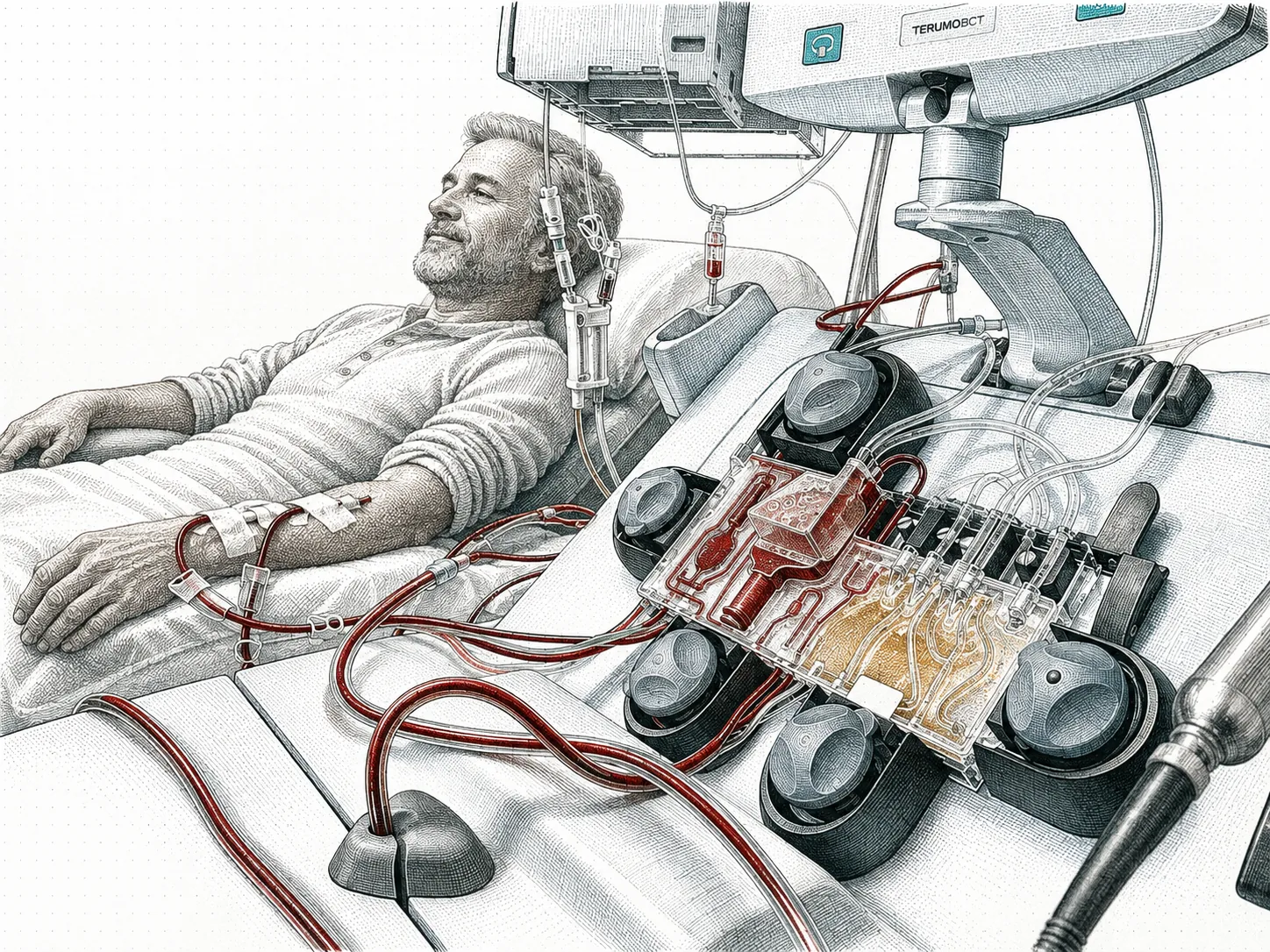
Once the prep is done, you get hooked up to the machine. If you’re using arm access, whichever arm is doing the drawing needs to stay fairly still for the rest of the session, which is more annoying than it sounds after the first hour. A central line skips that problem entirely, since both the draw and the return happen through the same site and your arms stay free.
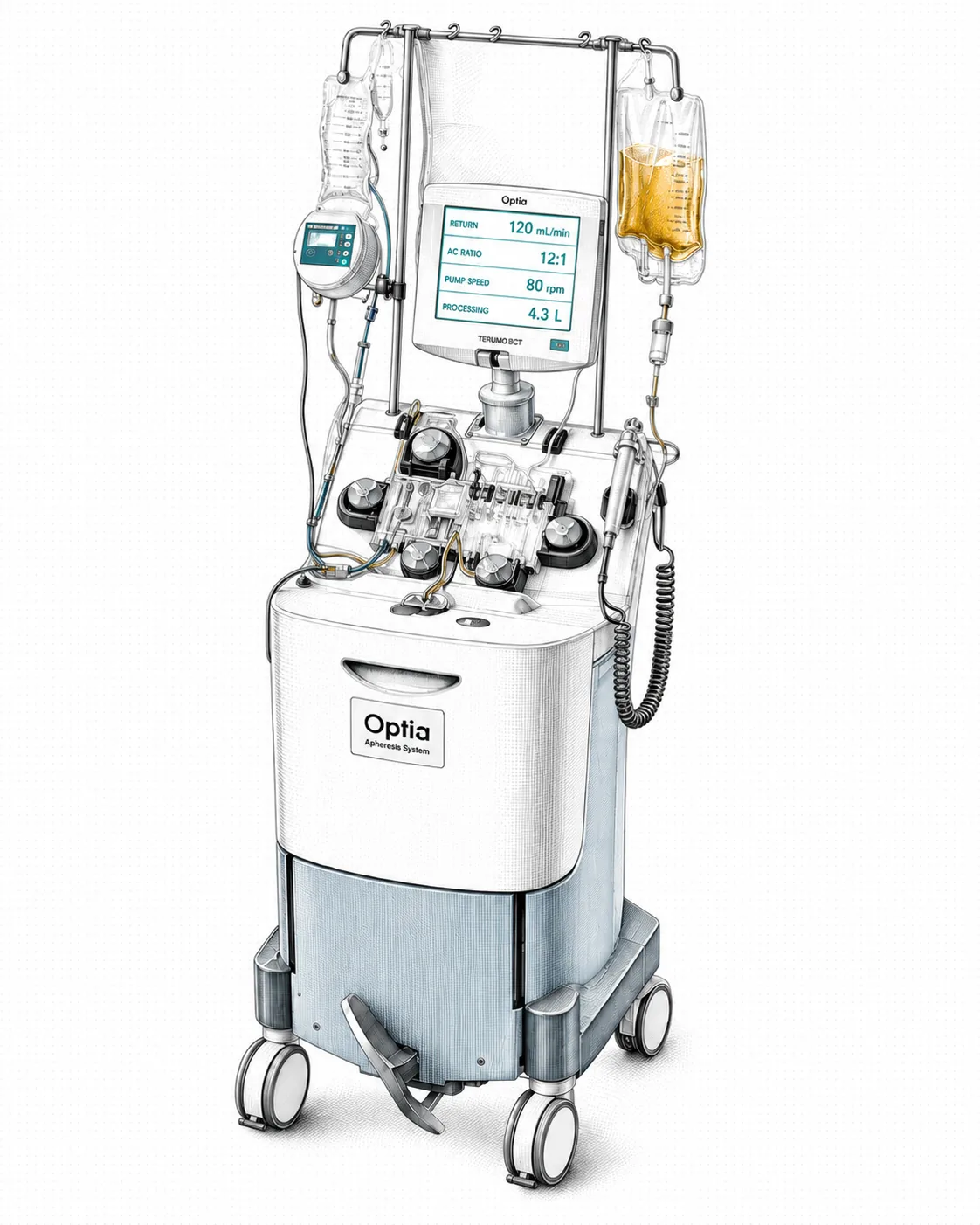
From there, the machine takes over. It pulls blood out, spins off the plasma, adds back the replacement fluid, and returns the rest of your blood, and it does all of this continuously in a loop rather than removing everything at once and giving it back later. At no point are you sitting there without most of your blood in your body. It’s a steady cycle, not a batch process.
People sometimes assume this is basically dialysis wearing a different name, and I understand the confusion given the tubing and the machine noise. But the two procedures are filtering for completely different things, and once you look at what each one is actually removing, they stop looking so similar. I walk through that comparison in Is Plasmapheresis the Same as Dialysis? if you want the full breakdown.
The exchange itself: how long it actually takes
This is the long stretch. Most sessions run a few hours, and the exact length depends on your size, how much plasma is being exchanged, the specific machine, and how well your access is flowing. Two to three hours is the number that comes up most often in patient materials, including the plain-language guide St. Jude puts out for families going through the procedure, though it’s not unusual for a session to run longer. For most people, this part is honestly kind of boring. You sit or recline. People watch shows, read, work on a laptop, nap, or just talk with the staff. You generally don’t feel the blood moving through the tubing at all.
A handful of things can come up during this stretch, and it’s worth knowing about them ahead of time rather than being caught off guard.
Tingling around the lips, face, or fingers is the most common one, and it traces back to that citrate and calcium relationship I mentioned earlier. It’s usually not dangerous, but you should tell the staff as soon as you notice it. They can slow the machine down or give you calcium to settle it.
Feeling cold is another common one. The replacement fluid going back into you can bring your temperature down a bit, and a blanket usually solves it.
Some people also feel lightheaded partway through, which tends to come from fluid shifts or a dip in blood pressure. Staff are checking your vitals throughout the session, not just at the start and end, so this is something they’re watching for even when you don’t say anything. Cleveland Clinic’s patient page on plasma exchange lists this same cluster of reactions (nausea, cold, mild numbness, lightheadedness), which matched what I’d read and heard from people who’d actually gone through it.
None of this means you’re left alone with a machine and hoping for the best. The people running the session are paying attention to you the entire time, not just the equipment. These are also the routine reactions, not the rarer, more serious complications people sometimes read about when they go looking for apheresis horror stories online. I cover those separately, and how often they actually happen, in What Are the Actual Risks of TPE?
Wrapping up
Once the target amount of plasma has been exchanged, the machine returns whatever blood is still sitting in the tubing. Then the lines come out. If you had IV access, someone holds pressure on the sites for a few minutes. Vitals get checked again, and you’ll usually sit for a bit longer just to make sure you’re steady before you head out.
How you feel afterward varies a lot. Some people feel completely normal and go about the rest of their day. Others feel wiped out and end up resting for the afternoon. A lot of people are fine to drive themselves home, but for a first session, I’d still arrange a ride if you can. You don’t know yet which category you’ll fall into.
Age plays into this less than I assumed going in. I figured older patients would automatically have a harder time with the whole process, but the complication data doesn’t really back that assumption up the way I expected. I went through what the numbers actually show in Is TPE Safe for Seniors? What the Complication Data Actually Shows.
The bag everyone ends up holding
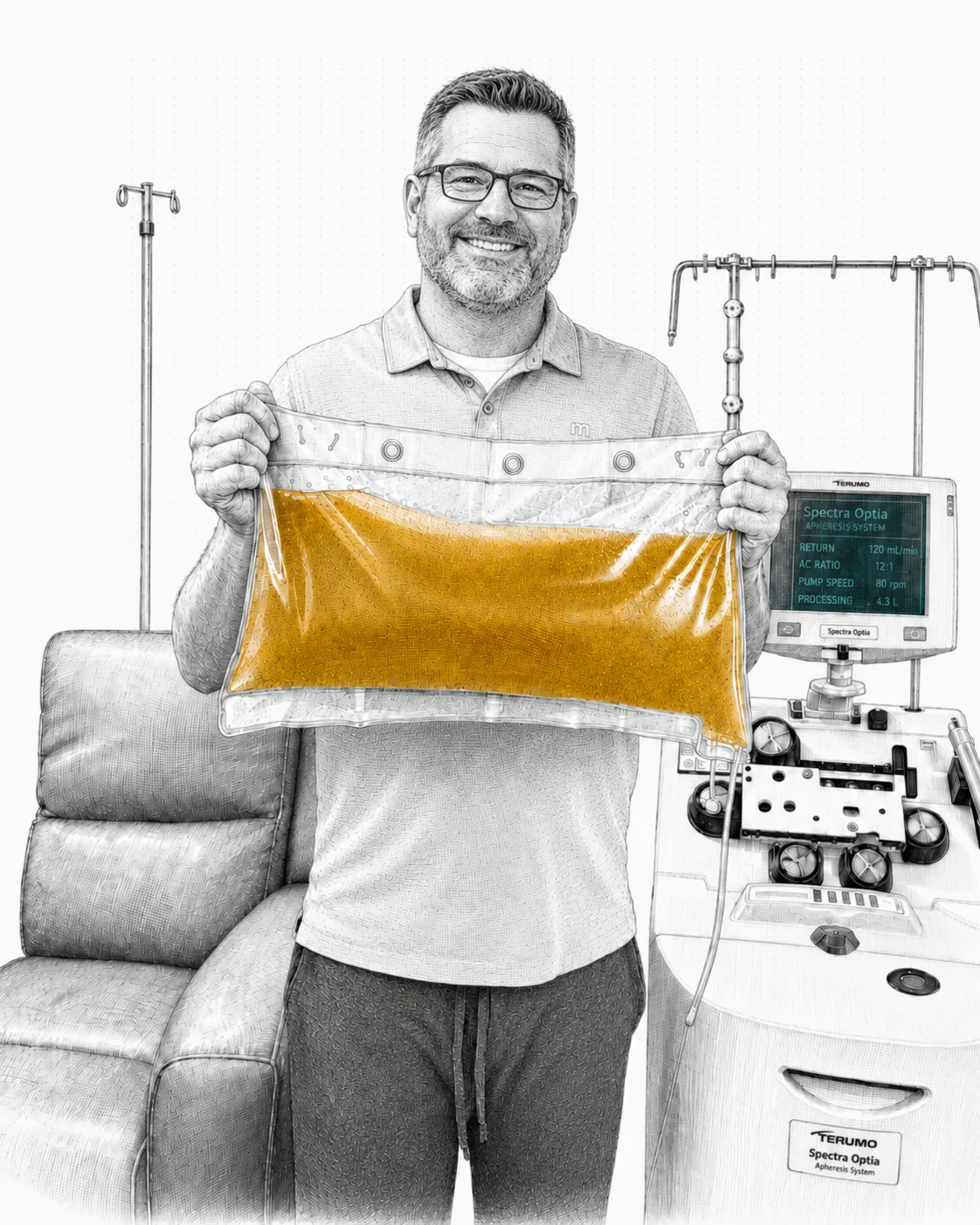
There’s a part of this that nobody warns you about ahead of time, and it’s become something of a running theme online. After the session, the plasma that got removed is sitting in a bag, and it’s genuinely bigger than most people expect. Sometimes it’s one large bag, sometimes two, and altogether it can weigh a few pounds. The color tends to run yellowish or tan, sometimes darker depending on what was in your plasma. The reaction is almost always some version of “wait, that was inside me?”
It’s a little strange and a little fascinating at the same time, and it’s turned into the most photographed moment of the whole appointment. Search around and you’ll find everyone from Joe Rogan to Mario Lopez to completely ordinary patients holding up their bag like a trophy. I get why. After hours of sitting still watching a machine hum, there’s something satisfying about seeing the actual physical result in your hands.
What I’d actually tell someone going in
A plasmapheresis session is long, but it isn’t dramatic. The real annoyances are sitting still for hours, occasionally feeling cold, and the small chance of citrate tingling that staff are already prepared to handle. Vascular access ends up being the biggest variable in how smooth the whole thing feels, more than anything else about the procedure itself. Good access makes the hours pass easily. Bad access makes everything harder than it needs to be.
The centers that do this well are the ones that explain what’s about to happen before it happens. That single habit, just walking a first-timer through the steps ahead of time, seems to take more of the edge off than anything else I’ve come across. Which is really the whole point of writing this down.
The information provided on this site is for general informational purposes only and is not intended as a substitute for professional medical advice, diagnosis, or treatment. Always seek the advice of your physician or other qualified health provider with any questions you may have regarding a medical condition. Do not disregard professional medical advice or delay seeking it because of information you find on this site. The content is not a substitute for an individualized assessment by a healthcare provider.