Is Plasmapheresis Safe for Seniors? What the Data Shows
What a large study of patients over 75 found


Somewhere in just about every forum thread and Facebook group where plasmapheresis comes up for an aging parent, the same question surfaces. Does plasma exchange get riskier once someone is older? I’ve seen it asked by adult children who just found out plasmapheresis, which you’ll also see called therapeutic plasma exchange or TPE by the clinical staff, might be an option for a parent in their late 70s or 80s, and I’ve seen a quieter version of it too, people wondering if their own age is going to be the thing that rules them out. It’s a fair question, and it took me a while to find an answer I actually trusted.
Most studies draw the line at 65, which isn’t very useful
Most of the research on plasmapheresis and age uses 65 as the line for “elderly.” That’s a strange cutoff if you actually think about it. A 66 year old and an 86 year old end up in the same category, even though their health, their organ function, and their tolerance for a medical procedure can look completely different. If you’re trying to figure out whether your 82 year old mother can handle plasmapheresis, a study built around a group of 65 year olds doesn’t tell you much. This isn’t a new complaint either. Back in 2016, a smaller single-center study published in the journal Artificial Organs asked almost the same question, whether age by itself changes how people tolerate plasma exchange. It’s older and much smaller than the data I’m about to get into, but it was chewing on the same basic problem: most TPE research lumps everyone over 65 into one bucket regardless of what else is going on with them.
What the French hospital data actually found
That’s why a study I came across recently caught my attention. Researchers went back through 13 years of plasma exchange sessions at a hospital in France and pulled out patients who were 75 or older at the time of treatment. They matched each of those 31 patients with a similar patient under 75, so the comparison wasn’t just “old people versus young people” in some loose sense. Between the two groups, that added up to 506 plasmapheresis sessions. It’s not a massive study, but it’s a real chunk of data focused on exactly the age group most families are actually asking about.
The main finding is the one worth leading with. The older group did not have more complications overall. Something went wrong in about 41% of sessions in the 75 and older group, compared to 43% in the younger group. That’s not a meaningful gap. Statistically, it’s close enough to call a wash.
What makes that result worth sitting with is what the older patients were carrying into treatment in the first place. 58% of them had high blood pressure, compared with just 10% of the younger group. 29% had heart disease, compared with 3% of the younger patients. On paper, the older group looked like the harder case by a wide margin. And yet they came through their plasmapheresis sessions about as well as a group that was, on average, considerably healthier going in.
I wouldn’t have guessed that. If you’d asked me to predict the outcome before I read the study, I probably would have expected the older patients to run into more trouble, just because more of them were dealing with cardiovascular issues that seem like they’d complicate any procedure involving blood volume shifts. That’s not what happened here.
The one place older patients did worse
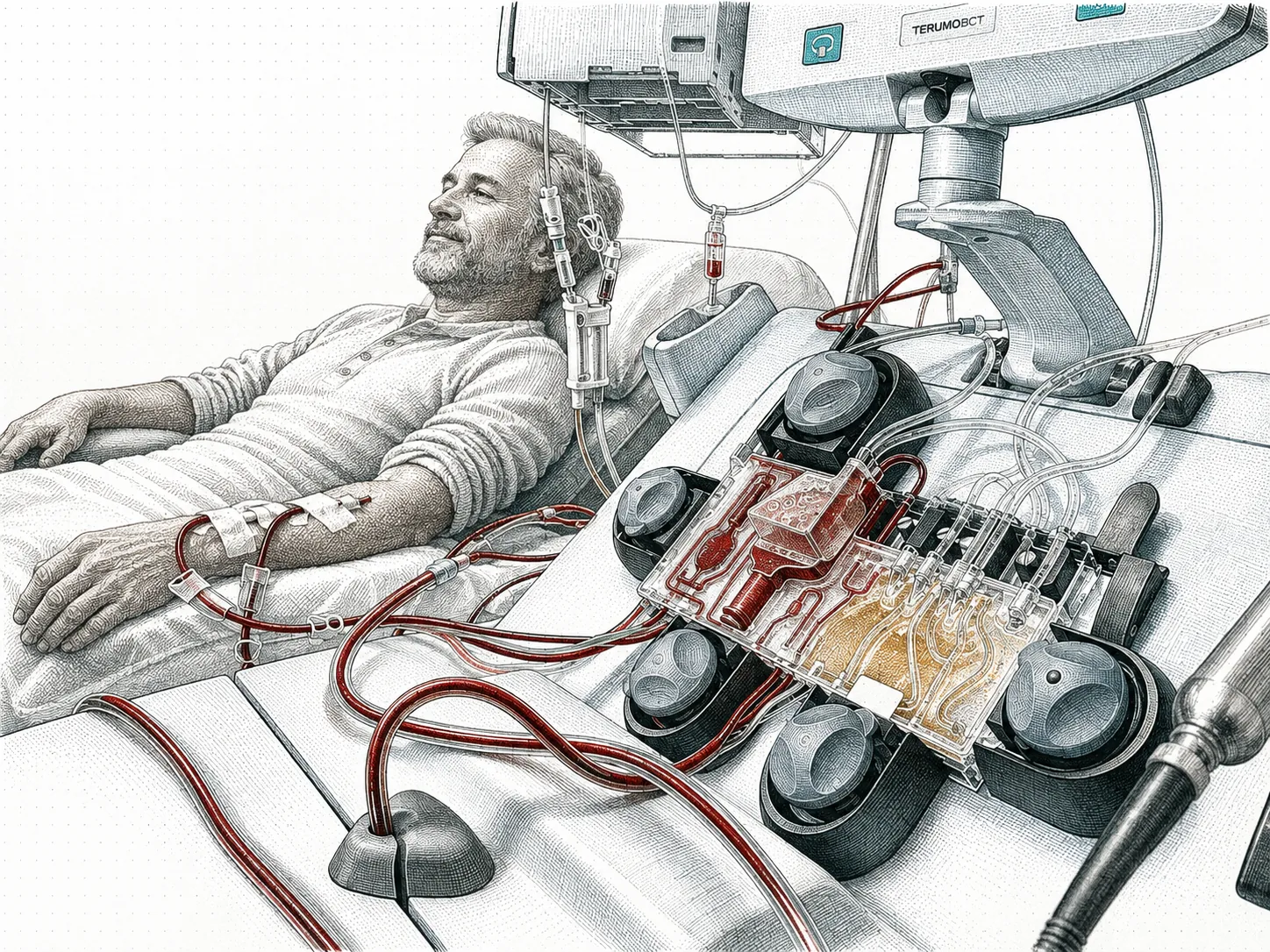
There was one place the older patients did worse, and it’s worth being specific about instead of glossing over it. They were more likely to develop low calcium levels that showed up on bloodwork without causing any symptoms. That’s not as alarming as it might sound. Calcium drops during plasmapheresis aren’t unusual to begin with, because the citrate used to keep the collected blood from clotting during the procedure binds to calcium as a side effect. I’ve walked through what a session actually looks like step by step elsewhere, but the short version is that clinics already watch calcium levels as a routine part of treatment. What this study adds is that older patients may deserve a bit more attention on that specific number, even when they aren’t showing any outward signs of a problem.
The other twist involves allergic reactions, and this is the part that genuinely surprised me. I would have guessed those might be more common in older patients, if only because they tend to be on more medications and can build up more sensitivities over the years. Instead, allergic reactions happened more often in the younger group. I don’t have a confident explanation for why, and as far as I can tell, neither did the researchers. Sometimes a result just runs the opposite direction of what you’d expect going in, and the honest move is to note it rather than force a theory onto it.
On survival, there wasn’t a statistically significant difference between the two groups at the one year mark either. I want to be careful with that one, because it’s easy to overread. A study like this isn’t set up to tell you that TPE itself extends or shortens anyone’s life. What it tells you is that among people who were already sick enough to need plasma exchange, being 75 or older didn’t obviously predict a worse one year outcome compared to being under 75 in the same situation.
What the study can and can’t tell you
None of this means plasmapheresis is automatically fine for every senior, and I don’t think the researchers would say that either. It’s a retrospective study out of a single hospital, built by looking back through records rather than following patients forward under controlled conditions. 31 patients per group is enough to notice a real pattern. It isn’t enough to close the book on the question. And “matched” patients are only matched on the factors the researchers chose to match them on. There’s always a chance some other difference between the two groups is doing more work than anyone accounted for.
It’s also worth pointing out that the people who actually write the clinical guidelines for apheresis don’t build in an age cutoff to begin with. The American Society for Apheresis, in its most recent guidelines, bases TPE eligibility on the specific disease being treated and how sick the patient is, not on a birthday. That lines up with what this dataset found. Age by itself wasn’t doing much of the predictive work. What mattered more was the actual medical picture the researchers were looking at, not the year on someone’s birth certificate.
What the study does do is push back on an assumption I think a lot of people carry into this conversation, which is that age by itself is a reason to expect trouble. That’s not what the numbers showed here. The patients who were older and had more health problems on paper still tolerated the sessions about as well as the younger, healthier group, aside from that one calcium finding. If you’re trying to work out whether an 80 year old can reasonably go through plasmapheresis, and you want the fuller picture of what can go wrong at any age, I’ve covered the general complication landscape separately. But this particular study is one of the more direct pieces of evidence I’ve come across on the age question specifically, instead of a study built around a 65 year old standing in for “elderly.”
I’d want to see this pattern hold up in another hospital’s data before I called it settled. But for now, if age alone is the reason someone’s leaning toward ruling plasmapheresis out for an older parent, or for themselves, this is the study that pushes back hardest against that assumption. The full paper, Therapeutic Plasma Exchange in the Elderly: Rare Indications but Good Tolerability, published in the Journal of Clinical Apheresis, is there if you want to read the data yourself.
Related
Plasmapheresis Side Effects: Is It Actually Dangerous?
In plain English, and in order of how often they actually happen
The information provided on this site is for general informational purposes only and is not intended as a substitute for professional medical advice, diagnosis, or treatment. Always seek the advice of your physician or other qualified health provider with any questions you may have regarding a medical condition. Do not disregard professional medical advice or delay seeking it because of information you find on this site. The content is not a substitute for an individualized assessment by a healthcare provider.