Plasmapheresis: Decades of Use in Hospital Medicine
A short history of a procedure that is not new


A lot of people find out about plasmapheresis, which you’ll also see called therapeutic plasma exchange or TPE once you’re reading anything written by clinicians, through a podcast or a longevity newsletter. The way it usually gets framed is as something new. A cutting edge biohacking protocol. The kind of thing a handful of well funded clinics rolled out in the last few years because someone figured out a clever trick with blood.
I believed some version of that too, before I actually looked into it. Then I found out ASFA, the American Society for Apheresis, published its first formal clinical guidelines for plasmapheresis in 1986. That stopped me. Nineteen eighty six. That’s not a startup timeline. That’s a procedure with a medical track record longer than most of the doctors currently practicing have been alive.
ASFA itself is older than that. Its own history page traces the organization back to 1982, when two earlier apheresis groups merged, one made up of nurses and allied health staff, the other made up of physicians and researchers who had been holding symposia on the subject since 1979 in Chicago. So the guidelines came out of an organization that had already spent years bringing hospital staff together around this specific procedure.
So I want to walk through where plasmapheresis actually came from, because I think the history changes how you should think about it.
Hospitals were doing this before anyone thought about aging
The basic concept of taking plasma out and replacing it isn’t new even by hospital standards. People were experimenting with the idea more than a hundred years ago. But therapeutic plasma exchange as an actual clinical procedure, something a hospital could reliably offer a sick patient, started taking shape in the 1950s and 60s. And it didn’t start with anti-aging in mind. It started with blood disorders that had no other good treatment.
One of the earliest applications was hyperviscosity syndrome. This is a condition where the blood carries so much excess protein that it gets abnormally thick, almost sludgy, and that thickness starts causing problems on its own: poor circulation, vision issues, neurological symptoms. Removing the plasma and replacing it with something cleaner was one of the only ways to bring the thickness down quickly.
The other early use, and I think the more important one for understanding what plasmapheresis actually is, was thrombotic thrombocytopenic purpura. TTP for short. It’s rare, and it’s dangerous. Small blood clots start forming throughout the body, and without treatment it kills a large share of the people who get it. Plasma exchange turned out to be the treatment that actually works. Not a nice to have. Not an optional wellness add on. For TTP, plasma exchange is the difference between most patients surviving and most patients dying. That single fact tells you a lot about how seriously hospitals have taken this procedure for a very long time.
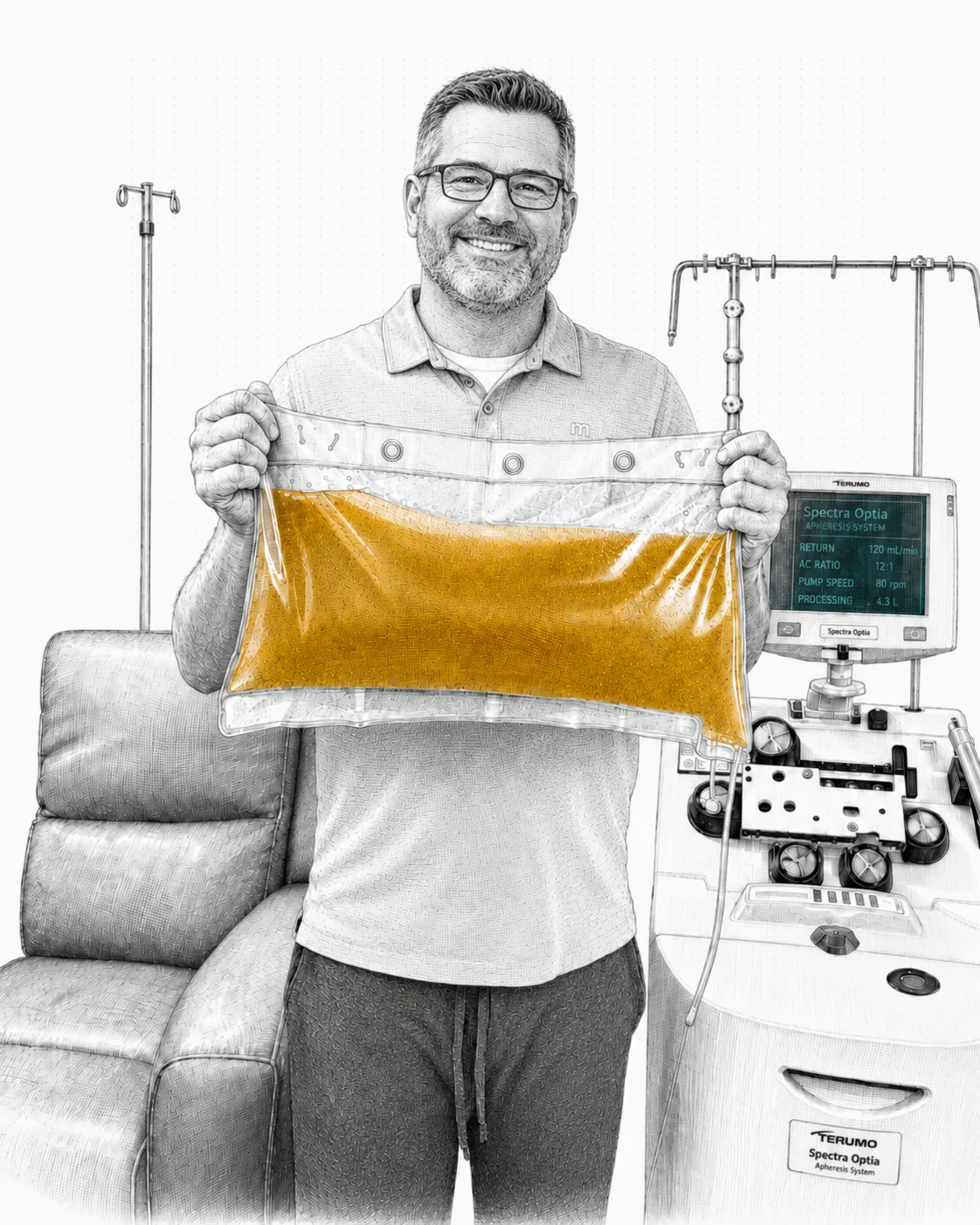
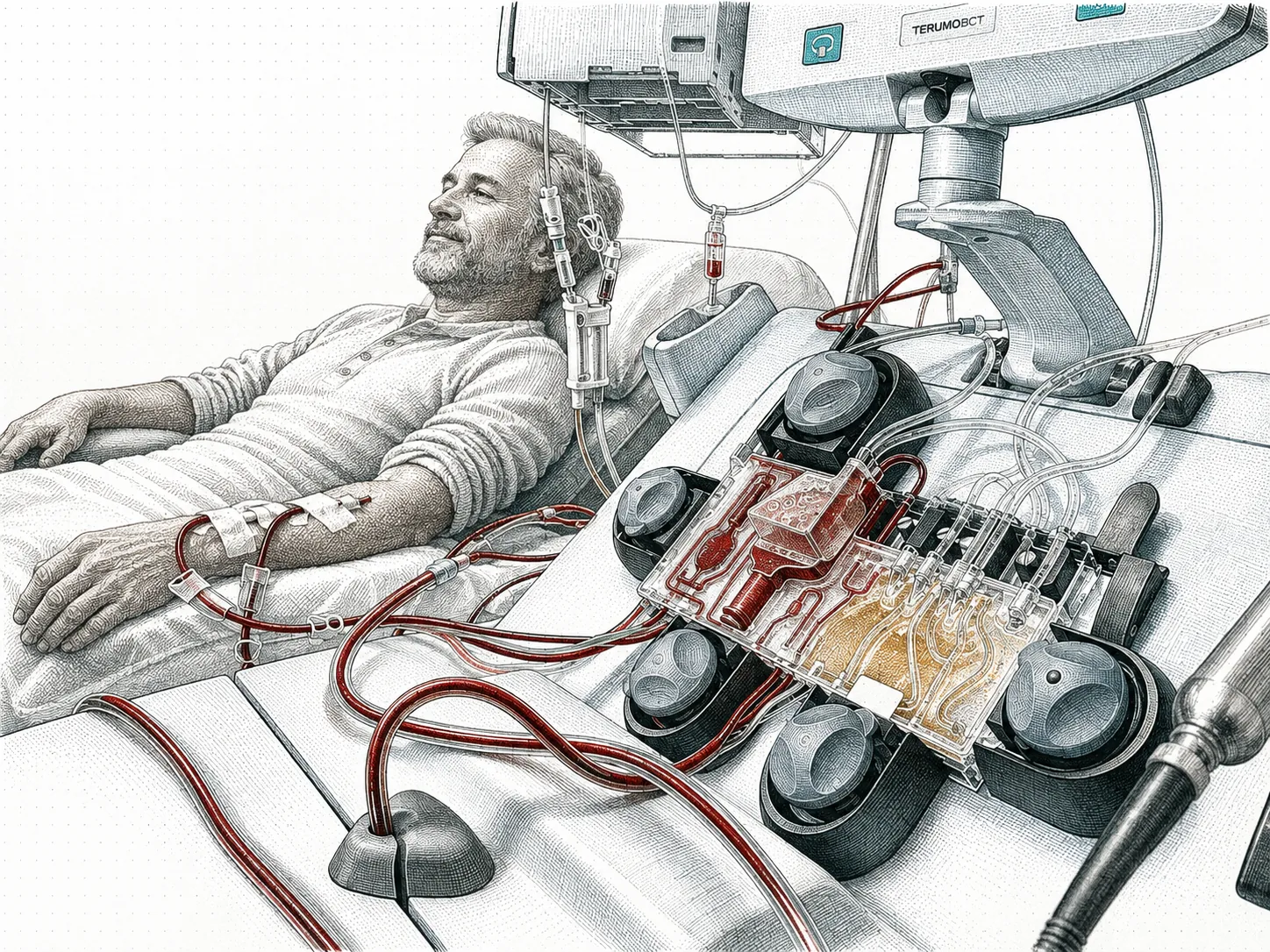
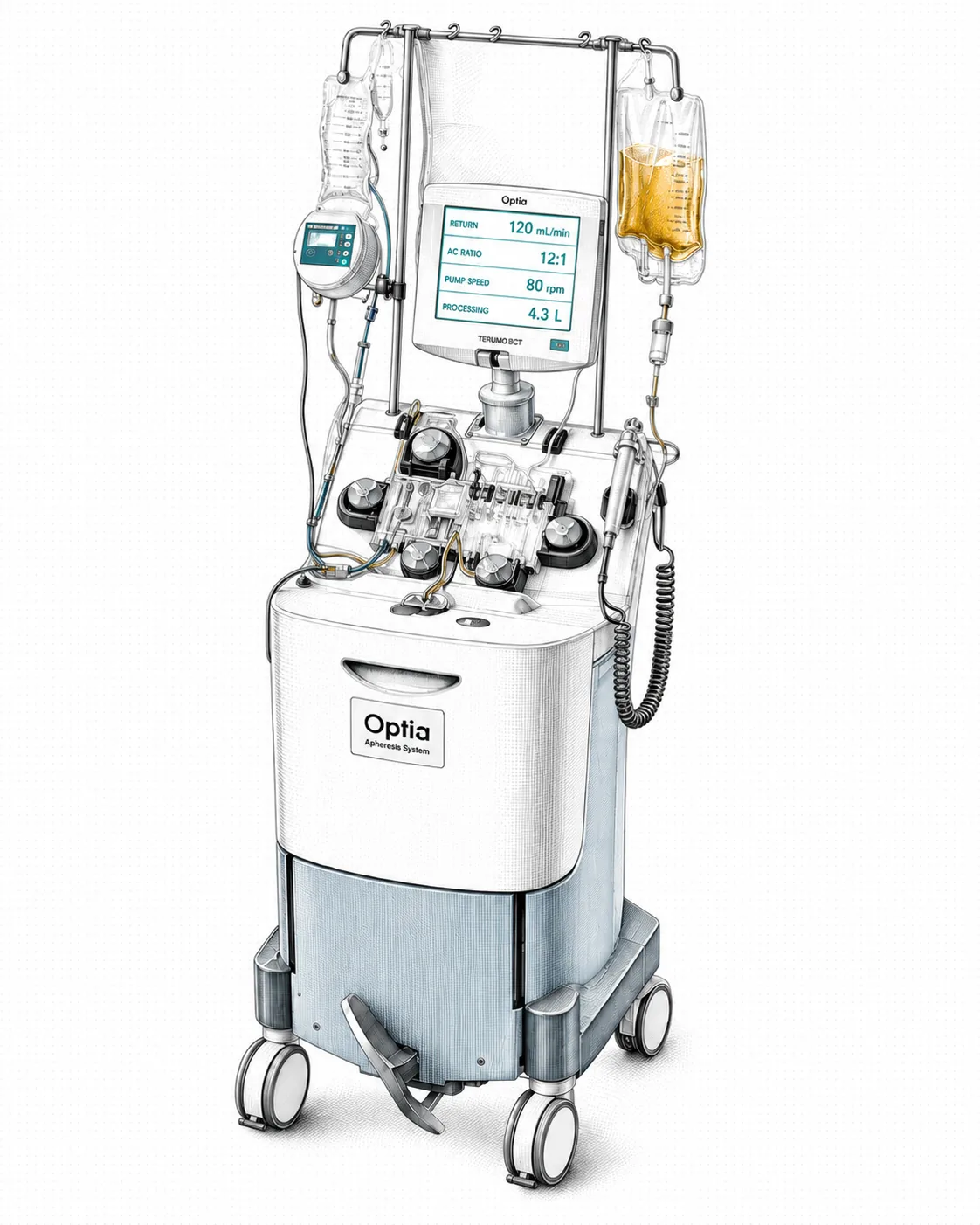
By the 1970s and into the 80s, the machines used to do apheresis (the general process of separating and filtering blood components, and worth keeping separate in your head from donating plasma, which is a very different thing) got a lot better. Better equipment meant hospitals could use TPE more precisely and for more conditions. That’s when it expanded into autoimmune disease, neurology, and kidney medicine. Myasthenia gravis, a condition where the immune system attacks the connection between nerves and muscles. Guillain-Barre syndrome, where the immune system attacks the nervous system itself. Certain kidney diseases where antibodies are the problem. TTP stayed on the list too.
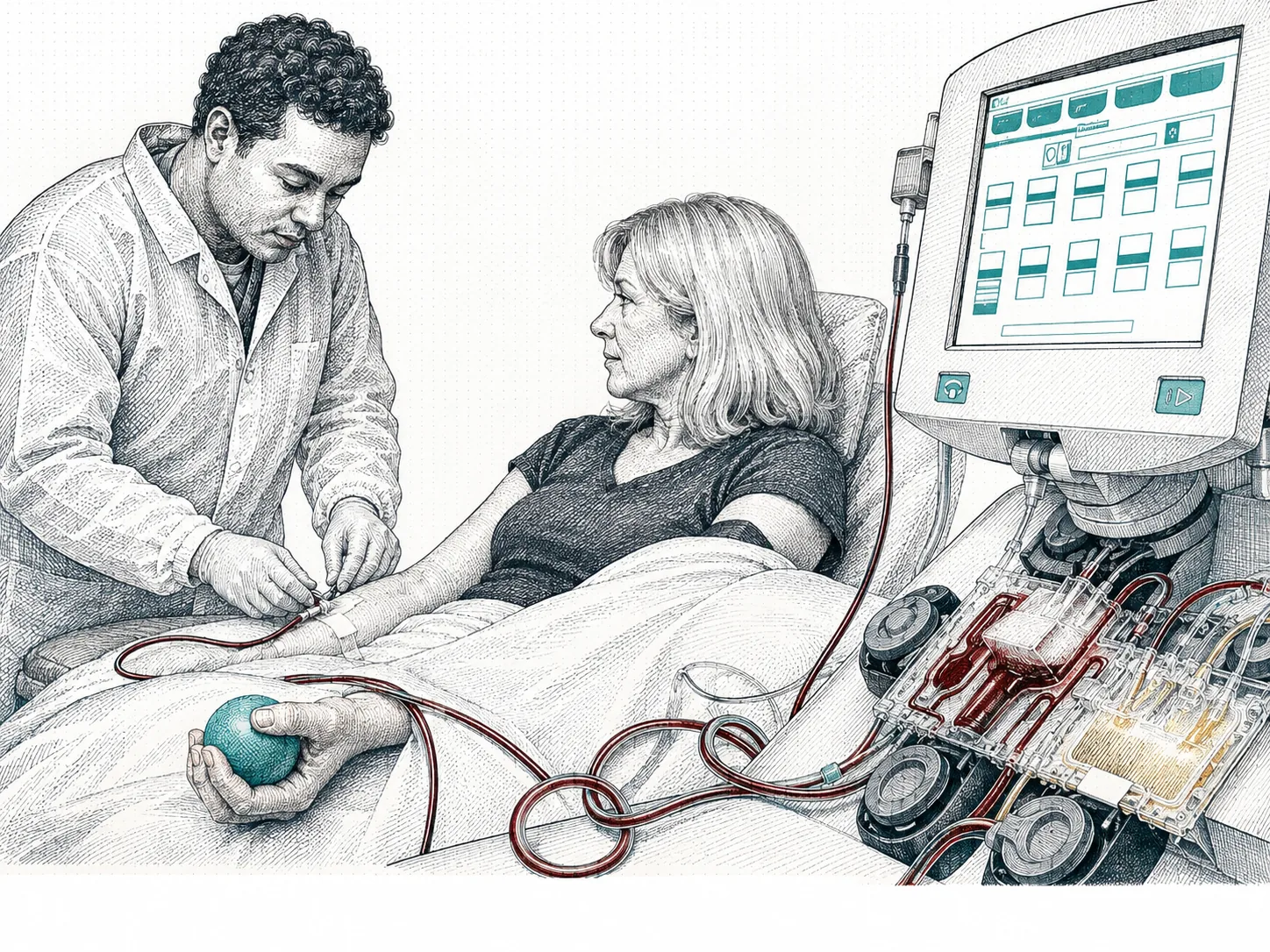
The logic connecting all of these is pretty consistent once you see it. If something harmful, usually an antibody or a misbehaving protein, is circulating in a patient’s plasma and causing damage, you can physically remove it. Filter the plasma out, replace it with fresh plasma or a substitute fluid, and the harmful stuff goes with it. It’s a mechanical solution to a problem that drugs don’t always solve well, because a drug has to counteract or block something, while plasma exchange just takes it out. If you want a sense of what that actually looks like from the patient’s side, I walked through a full session start to finish elsewhere in this guide.
By 1986, this had been going on long enough and across enough conditions that ASFA put together formal guidelines on when plasma exchange should be used and how, sorting conditions into categories based on how strong the evidence was for each one. TTP landed in the top tier back then, and it still does. ASFA’s category system runs from Category I, where apheresis is considered first line therapy, down to Category IV, where the evidence says it shouldn’t be used at all, and TTP sits at Category I with the strongest grade the system gives out. They’ve kept updating those guidelines ever since, most recently in a 2023 edition that runs well over a hundred pages covering dozens of conditions, which tells you it’s an active, evolving area of hospital medicine, not something that got established once and then sat still. So by the time anyone in longevity circles started asking whether plasmapheresis could do something for aging, hospitals already had roughly half a century of experience running the procedure for other reasons entirely, including a well documented risk and safety profile built up over that same stretch of time.
Longevity found this tool. It didn’t build it.
The interest in plasmapheresis for aging comes from a completely different research thread, and it’s worth knowing where that thread starts because it’s not the same story as the hospital history at all.
Around 2013 and 2014, researchers including Amy Wagers and Saul Villeda published parabiosis studies that got a lot of attention. Parabiosis means surgically joining the circulatory systems of two animals, in this case young and old mice, so their blood mixes. The old mice in these experiments showed real improvements in tissue function afterward. That result raised an obvious question. Was young blood adding something beneficial to the old mouse? Or was old blood carrying something harmful that was being diluted away once it mixed with young blood?
That second question turned out to matter more than people expected. Irina and Michael Conboy at UC Berkeley dug into it specifically, and their work pointed toward the old plasma itself being a meaningful part of the problem. In one of their more interesting experiments, they didn’t add any young blood at all. They just diluted the old mouse’s plasma with a mix of saline and albumin, essentially replacing some of it with a neutral substitute, and they saw a lot of the same improvements that showed up in the young blood experiments.
That result is what shifted the whole framing. It moved the story away from “young blood contains magic” and toward something more mechanical: aging plasma may build up factors over time that interfere with the body’s normal repair processes, and removing or diluting those factors might matter more than anything young blood specifically adds. That idea lines up directly with what plasma exchange already does. It’s a tool built to remove things from circulating plasma. Somebody just had to ask whether the buildup associated with aging was one of those things worth removing.
I think that’s a genuinely interesting scientific idea, and it’s part of why I got interested in this subject in the first place. But I want to be honest about where the evidence actually stands. Mouse plasma dilution studies are not the same as proof that plasma exchange slows aging in humans. The human research on plasmapheresis for longevity is still early, and I wouldn’t treat any of it as settled.
What I do think is worth correcting is the idea that plasmapheresis itself is some new invention that longevity clinics came up with. It isn’t. The procedure, the machines, the safety protocols, the decades of guidelines: all of that was built by hospital medicine, for hospital medicine, well before anyone connected it to aging. The longevity world took an existing, well understood medical tool and pointed it at a new question. That’s a very different thing than inventing the tool itself, and I think knowing the difference is useful context before you read anything else about TPE and longevity.
Related
Plasmapheresis vs. Dialysis: What's the Difference?
Similar chair, different job
Plasmapheresis vs. Plasma Donation: What's the Difference?
Why the two get confused, and why it matters
The information provided on this site is for general informational purposes only and is not intended as a substitute for professional medical advice, diagnosis, or treatment. Always seek the advice of your physician or other qualified health provider with any questions you may have regarding a medical condition. Do not disregard professional medical advice or delay seeking it because of information you find on this site. The content is not a substitute for an individualized assessment by a healthcare provider.